State         Temp.       Date            Station        Elevation

              ( F)                                         (feet)

Alabama        -27    Jan. 30, 1966     New Market           760

Alaska         -80    Jan. 23, 1971     Prospect Creek     1,100

Arizona        -40    Jan.  7, 1971     Hawley Lake        8,180

Arkansas       -29    Feb. 13, 1905     Pond               1,250

California     -45    Jan. 20, 1937     Boca               5,532

Colorado       -61    Feb.  1, 1985     Maybell            5,920

Connecticut    -32    Feb. 16, 1943     Falls Village        585

Delaware       -17    Jan. 17, 1893     Millsboro             20

Florida        - 2    Feb. 13, 1899     Tallahassee          193

Georgia        -17    Jan. 27, 1940     N. Floyd County    1,000

Hawaii          12    May  17, 1979     Mauna Kea         13,770

Idaho          -60    Jan. 18, 1943     Island Park Dam    6,285

Illinois       -36    Jan.  5, 1999     Congerville          722

Indiana        -36    Jan. 19, 1994     New Whiteland        785

Iowa           -47    Feb.  3, 1996*    Elkader              770

Kansas         -40    Feb. 13, 1905     Lebanon            1,812

Kentucky       -37    Jan. 19, 1994     Shelbyville          730

Louisiana      -16    Feb. 13, 1899     Minden               194

Maine          -48    Jan. 19, 1925     Van Buren            458

Maryland       -40    Jan. 13, 1912     Oakland            2,461

Massachusetts  -35    Jan. 12, 1981     Chester              640

Michigan       -51    Feb.  9, 1934     Vanderbilt           785

Minnesota      -60    Feb.  2, 1996     Tower              1,430   

Mississippi    -19    Jan. 30, 1966     Corinth              420

Missouri       -40    Feb. 13, 1905     Warsaw               700

Montana        -70    Jan. 20, 1954     Rogers Pass        5,470

Nebraska       -47    Feb. 12, 1899     Camp Clarke        3,700

Nevada         -50    Jan.  8, 1937     San Jacinto        5,200

New Hampshire  -47    Jan. 29, 1934     Mt. Washington     6,288

New Jersey     -34    Jan.  5, 1904     River Vale            70

New Mexico     -50    Feb.  1, 1951     Gavilan            7,350

New York       -52    Feb. 18, 1979*    Old Forge          1,720

North Carolina -34    Jan. 21, 1985     Mt. Mitchell       6,525

North Dakota   -60    Feb. 15, 1936     Parshall           1,929

Ohio           -39    Feb. 10, 1899     Milligan             800

Oklahoma       -27    Jan. 18, 1930     Watts                958

Oregon         -54    Feb. 10, 1933*    Seneca             4,700

Pennsylvania   -42    Jan.  5, 1904     Smethport     est. 1,500

Rhode Island   -25    Feb.  5, 1996     Greene               425

South Carolina -19    Jan. 21, 1985     Caesars Head       3,100

South Dakota   -58    Feb. 17, 1936     McIntosh           2,277

Tennessee      -32    Dec. 30, 1917     Mountain City      2,471

Texas          -23    Feb.  8, 1933*    Seminole           3,275

Utah           -69    Feb.  1, 1985     Peter's Sink       8,092

Vermont        -50    Dec. 30, 1933     Bloomfield           915

Virginia       -30    Jan. 22, 1985     Mountain Lake      3,870

Washington     -48    Dec. 30, 1968     Mazama             2,120

                                        Winthrop           1,755 

West Virginia  -37    Dec. 30, 1917     Lewisburg          2,200

Wisconsin      -55    Feb.4,   1996     Couderay           1,300  

Wyoming        -66    Feb.  9, 1933     Riverside          6,650


*Also on earlier dates at the same or other places.

State    Temp    Date          Station                   Elevation (feet) 
Ala. 112 Sept. 5, 1925 Centerville 345
Alaska 100 June 27, 1915 Ft. Yukon 420*
Ariz. 128 June 29, 1994 Lake Havasu 505
Ark. 120 Aug. 10, 1936 Ozark 396
Calif. 134 July 10, 1913 Death Valley N/A
Colo. 118 July 11, 1888 Bennett 5,484
Conn. 106 July 15, 1995 Danbury 450
Del. 110 July 21, 1930 Millsboro 20
Fla. 109 June 29, 1931 Monticello 207
Ga. 112 July 24, 1952 Louisville 132
Hawaii 100 April 27,1931 Pahala 850
Idaho 118 July 28, 1934 Orofino 1,027
Ill. 117 July 14, 1954 E. St Louis 410
Ind. 116 July 14, 1936 Collegeville 672
Iowa 118 July 20, 1934 Keokuk 614
Kansas 121 July 24, 1936 Alton 1,651
Ky. 114 July 28, 1930 Greensburg 581
La. 114 Aug. 10, 1936 Plain Dealing 268
Maine 105 July 10, 1911 N. Bridgton 450
Md. 109 July 10, 1936 Cumberland and Frederick 623, 325
Mass. 107 Aug. 2, 1975 New Bedford and Chester 120, 640
Mich. 112 July 13, 1936 Mio 963
Minn. 114 July 6, 1936 Moorhead 904
Miss. 115 July 29, 1930 Holly Springs 600
Mo 118 July 14, 1954 Warsaw and Union 705, 560
Mont. 117 July 5, 1937 Medicine Lake 1,950
Neb. 118 July 24, 1936 Minden 2,169
Nev. 125 June 29, 1994 Laughlin 605
N.H. 106 July 4, 1911 Nashua 125
N.J. 110 July 10, 1936 Runyon 18
N.M. 122 June 27, 1994 Lakewood N/A
N.Y. 108 July 22, 1926 Troy 35
N.C. 110 Aug. 21, 1983 Fayetteville 213
N.D. 121 July 6, 1936 Steele 1,857
Ohio 113 July 21, 1934 Gallipolis 673
Okla. 120 June 27, 1994 Tipton 1,350
Ore. 119 Aug. 10, 1898 Pendleton 1,074
Pa. 111 July 10, 1936 Phoenixville 100
R.I. 104 Aug. 2, 1975 Providence 51
S.C. 111 June 28, 1954 Camden 170
S.D. 120 July 15, 2006 Kelly Ranch/Usta 2,339
Tenn. 113 Aug. 9, 1930 Perryville 377
Texas 120 Aug. 12, 1936 Seymour 1,291
Utah 117 July 5, 1985 Saint George 2,880
Vt. 105 July 4, 1911 Vernon 310
Va. 110 July 15, 1954 Balcony Falls 725
Wash. 118 Aug. 5, 1961 Ice Harbor Dam 475 475
W. Va. 112 July 10, 1936 Martinsburg 435
Wis. 114 July 13, 1936 Wisconsin Dells 900
Wyo. 116 Aug. 8, 1983 Basin 3,500
Help Charts
helpcharts.com
cheat sheets how to charts
Question
Record low temperatures by state
The coldest temperature ever recorded in the contiguous 48 States, was -69.7°F
(rounded off to -70°F) at Rogers Pass, in Lewis and Clark County, Montana, on Jan.
20, 1954. Rogers Pass is on State Highway 200 about 38 miles northwest of Helena.
Located in mountainous and heavily forested terrain about one-half mile east of
and 140 feet below the summit of the Continental Divide.

The coldest temperature ever recorded east of the Mississippi River was -60°F in
Tower, Minnesota, on Feb. 2, 1996.

Hawaii is the only state that's never recorded a below-zero temperature.

Many are amazed by Hawaii's 12°F reading. But it was measured at the
observatory on Mauna Kea, which is 13,770 feet above sea level. Snow falls there
from time to time.
Record high temperatures by state

The following preventative measures can help you to avoid heat related
injuries.


1) Drink plenty of fluids. In hot environments, it is possible for the body to loose one
liter of fluids per hour. Thirst is not a good indicator of fluid loss. Don’t wait until you
are thirsty to drink fluids.

2) Be aware of your environment. If you work in the heat or around heat sources,
take whatever steps are possible to control the heat externally.

3) Take frequent breaks. As the temperature increases, more frequent breaks are
needed to stay cool.

4) Wear proper clothing. Loose, lightweight fabrics encourage heat release.
Acclimatize. It takes at least 7-10 days to get used to working in a hot environment.

5) Stay in shape. A healthy heart and good muscle tone work more efficiently and
generate less heat.

6) Eat light during the workday. Hot, heavy meals add heat to the body and divert
blood flow to aid with digestion. Normal dietary intake typically replaces all salt lost
during the day, so there is no need to take salt supplements.

7) Be aware of special heat stress risk. Caffeine, alcohol, diabetes, or medications for
high blood pressure and allergies can increase the risk of heat stress.

When the body is unable to cool itself through sweating, serious heat illness may
occur. The most severe heat-induced illnesses are heat exhaustion and heat stroke. If
action is not taken to treat heat exhaustion, the illness could progress to heat stroke
and possible death. The following are symptoms and treatments for these heat
related illnesses:


Symptoms of Heat Exhaustion

Headaches, dizziness/Lightheadedness, weakness, mood changes (irritable or
confused/can’t think straight), feeling sick to your stomach, vomiting/throwing up,
decreased and dark-colored urine, fainting/passing out, pale and clammy skin.

Treatment:
Move the person to a cool, shaded area to rest. Don’t leave the person alone. If the
person is dizzy or lightheaded, lay them on their back and raise their legs about 6-8
inches. If the person is sick to their stomach, lay tem on their side.
Loosen and remove any heavy clothing.
Have the person drink some cool water (a small cup every 15 minutes) if they are not
feeling sick to the stomach.
Try to cool the person by fanning them. Cool the skin with a cool spray mist of water
or wet cloth.
If they do not feel better in a few minutes, call for emergency help (ambulance or
911).

If heat exhaustion is not treated, the illness may advance to heat stroke.


Symptoms of Heat Stroke – A medical emergency

Dry, pale skin (no sweating), hot, red skin (looks like a sunburn), mood changes
(irritable, confused/not making any sense), seizures/fits; collapse/passed out (no
response).

Treatment:
Call for emergency help (ambulance or 911).
Move the person to a cool shaded area. Don’t leave the person alone. Lay them on
their back, and if the person is having seizures/fits, remove any object close to them
so they won’t strike against them. If the person is sick to their stomach, lay them on
their side.
Remove any heavy and outer clothing.
Have the person drink some cool water (a small cup every 15 minutes) if they are
alert enough to drink anything and not feeling sick to the stomach.
Try to cool the person by fanning them. Cool the skin with a cool spray mist of water,
wet cloth, or wet sheet.
If ice is available, place ice packs under the armpits and groin area.
Know the Terms

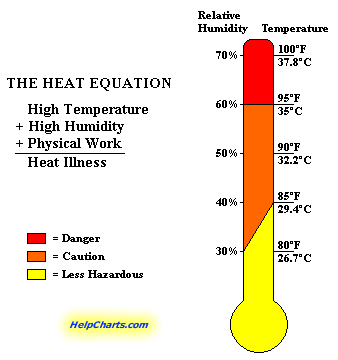
Familiarize yourself with these terms to help identify an extreme heat hazard:

Heat Wave
Prolonged period of excessive heat, often combined with excessive humidity.

Heat Index
A number in degrees Fahrenheit (F) that tells how hot it feels when relative
humidity is added to the air temperature. Exposure to full sunshine can increase
the heat index by 15 degrees.

Heat Cramps
Muscular pains and spasms due to heavy exertion. Although heat cramps are
the least severe, they are often the first signal that the body is having trouble
with the heat.

Heat Exhaustion
Typically occurs when people exercise heavily or work in a hot, humid place
where body fluids are lost through heavy sweating. Blood flow to the skin
increases, causing blood flow to decrease to the vital organs. This results in a
form of mild shock. If not treated, the victim’s condition will worsen. Body
temperature will keep rising and the victim may suffer heat stroke.

Heat Stroke
A life-threatening condition. The victim’s temperature control system, which
produces sweating to cool the body, stops working. The body temperature can
rise so high that brain damage and death may result if the body is not cooled
quickly.

Sun Stroke
Another term for heat stroke.
Extreme Temperatures
Submitted By: Brian
www.stlouisbuyandsell.com